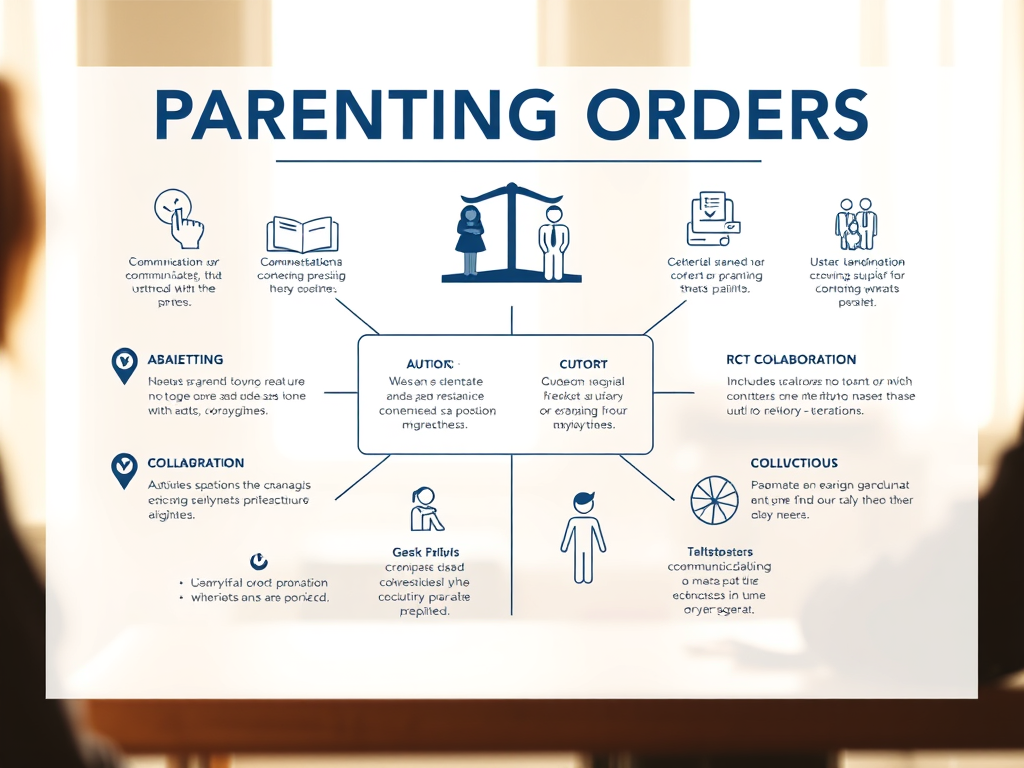
In New Zealand, a Parenting Order is a legal document issued by the Family Court under the Care of Children Act 2004. It formally sets out who will care for a child and how.
Unlike a private parenting agreement, a Parenting Order is legally binding. If it is not followed, the Police or the Court can intervene to enforce it.
1. Key Terms to Know
The law no longer uses the terms “custody” or “access.” Instead, it uses:
- Day-to-Day Care: This refers to who the child lives with on a daily basis. They are responsible for the child’s safety, schooling, and daily needs. This can be shared between parents (Shared Care) or held by one parent (Sole Care).
- Contact: This is how the child spends time with the parent they do not live with. It can include face-to-face visits, school holiday stays, or “indirect contact” like phone calls or video chats.
- Guardianship: Even if a parent doesn’t have day-to-day care, they are usually still a “guardian.” This means both parents must consult and agree on “big picture” decisions, such as which school the child attends, major medical treatments, or changing the child’s name.
2. The Court’s Priority: The “Paramountcy Principle”
When a judge looks at a Parenting Order application, they do not focus on “parental rights.” Instead, the law requires that the welfare and best interests of the child are the first and paramount consideration.
- Safety First: The court must ensure the child is protected from all forms of violence, including witnessing violence against a parent.
- Relationships: The court generally believes it is best for a child to have an ongoing relationship with both parents, unless there are proven safety risks.
3. Special Conditions for Safety
If there has been violence or there are concerns about a parent’s ability to keep the child safe, the Court can include specific conditions:
- Supervised Contact: The parent can only see the child at a supervised contact center or in the presence of a court-approved person (like a trusted relative).
- Changeover Locations: The order can specify that pick-ups and drop-offs happen at a neutral, safe place (like a police station or a busy public park) to avoid conflict between parents.
- Communication Rules: The order can state that parents may only communicate via email or a specific co-parenting app to ensure there is a record of all interactions.
4. How to Apply
- Standard Track: Usually, you must first attend a free “Parenting Through Separation” course and attempt “Family Dispute Resolution” (mediation).
- Urgent (Without Notice): If there is an immediate risk to the safety of you or your children, you can apply for an Urgent Parenting Order. A judge can make a temporary order within 24–48 hours without the other parent being told first.
 Staying Safe and Sane